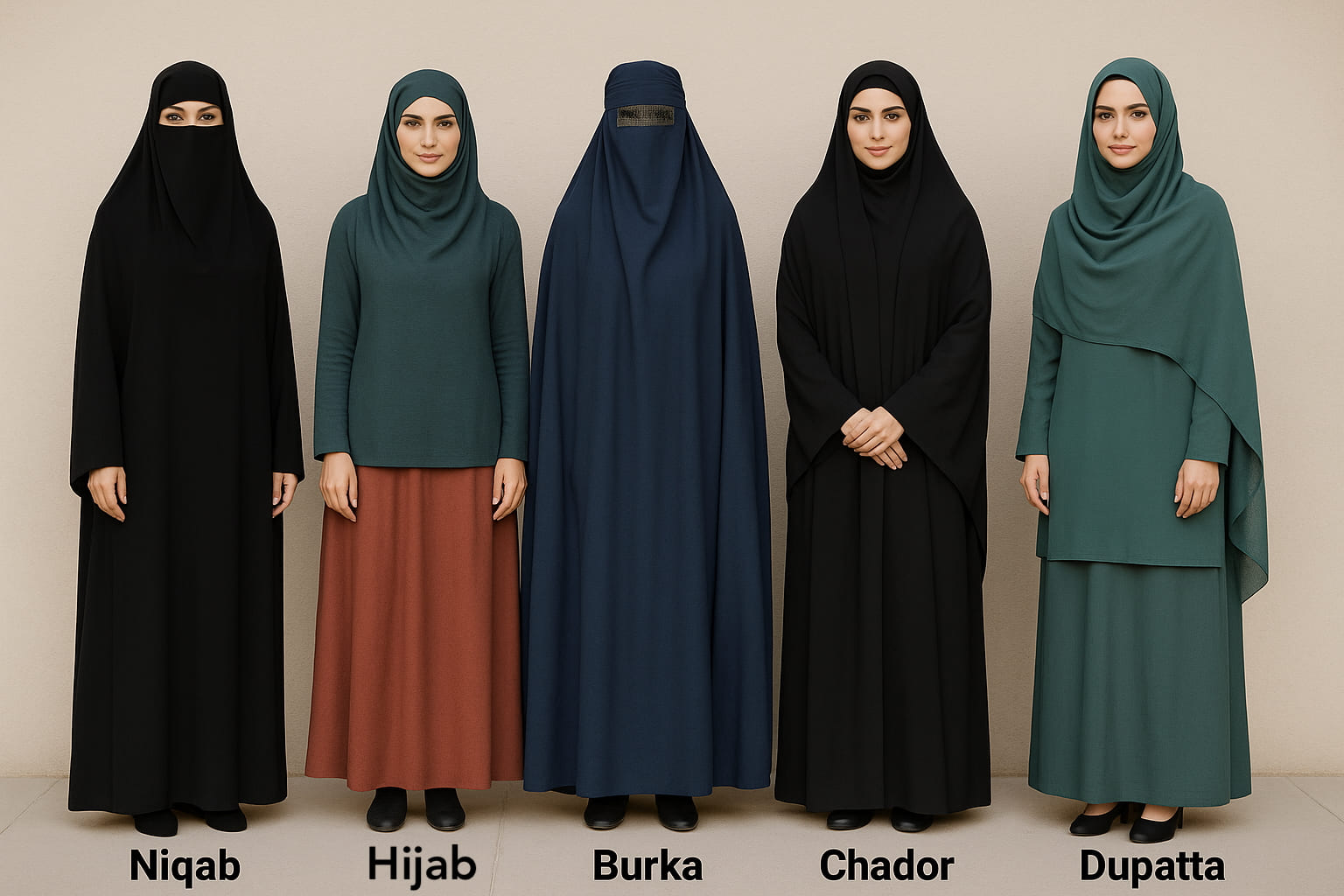
Green is one of the most beloved colors in Islamic tradition. It symbolizes life, nature, and paradise. It is said to have been the favorite color of the Prophet Muhammad (peace be upon him), which is why green scarves and accessories are never just stylistic choices — they are acts of remembrance, subtle nods to something greater. Green is not loud. It lives quietly — like a leaf catching sunlight, like morning light entering a mosque.
White speaks of purity. It’s worn during Hajj, when the soul seeks cleansing. It appears during Ramadan, when each morning feels like a new beginning. White doesn’t demand attention — it offers space. Space for clarity, honesty, renewal. In white, a woman seems to say, “Today I begin again, with God and with myself.”
Black, contrary to popular assumptions, isn’t about hiding. It’s about dignity. About quiet control. A black abaya doesn’t scream. It holds space. It says: “I’m present, but not on display.” In Islamic culture, black also symbolizes sacrifice and humility. It’s not somber — it’s profound.
Blue is the color of knowledge. It’s found in ancient calligraphy, glazed tiles, the sky above old madrasas. It’s rarely the main color of a garment, but it’s always there — in the trim, in embroidery, in a quiet pattern along the sleeve. It’s the color of stillness and thought. It asks nothing — but it understands.
Red is warmth. It’s love, family, life. You won’t often see it as the dominant color in Muslim clothing, but it lives in the background — in a gemstone ring, in the thread of a headscarf, in the lining of a handbag. Red is a reminder: even in modesty, the heart beats strong.
Gold is for celebration. It’s saved for special days — weddings, nikkah, joyous evenings. Gold embroidery on a cuff, a crescent-shaped brooch, or the glimmer of fabric under soft light — it doesn’t boast wealth. It honors the beauty of the moment. It expresses gratitude. And generosity.
Silver is like quiet gold. It’s more restrained but no less refined. Often chosen by those who value nuance and detail, it highlights without overpowering. It’s a color of grace — understated and luminous.


 13Oct
13Oct


 16Jul
16Jul
 25Jul
25Jul
 20Aug
20Aug
 20Aug
20Aug
 28Nov
28Nov